
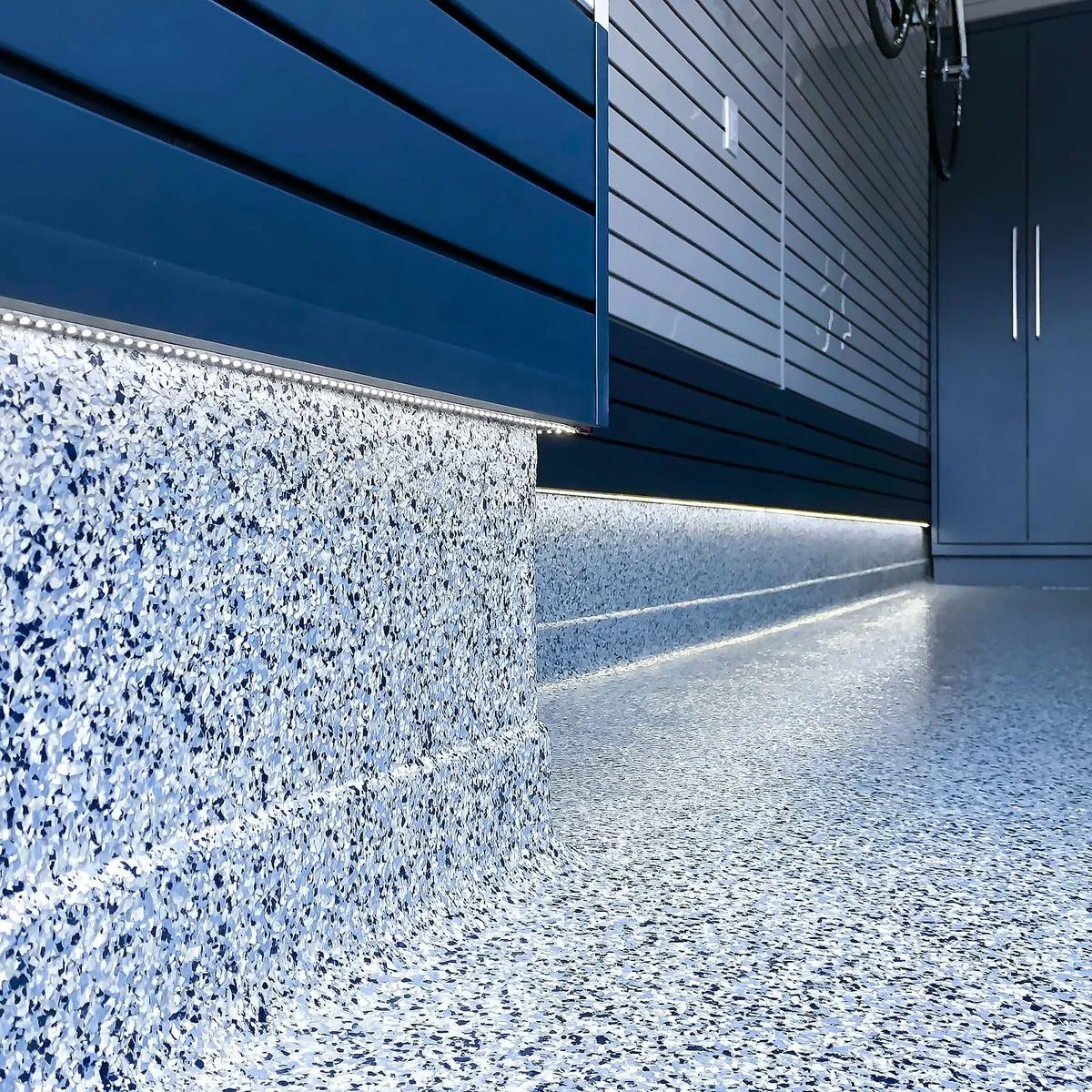
Epoxy and polyaspartic floor coatings can protect concrete floors, improve their appearance, and make routine cleaning easier. For homeowners and businesses in Edmonton, the right option depends on the floor’s condition, exposure to sunlight and moisture, expected traffic, installation time, and budget.
Epoxy floor coatings are often considered for indoor spaces where cost and durability are important. Polyaspartic coatings are known for their fast curing and strong UV resistance, making them an option for garages and other areas where reduced downtime matters.
Explorer Paint helps Edmonton property owners explore floor coating options based on their property’s needs. This guide explains the main differences between epoxy and polyaspartic coatings, their benefits, costs, applications, and maintenance requirements.
Why Is Floor Coating Important in Edmonton?
Concrete garage and workshop floors can be exposed to road salt, snow, moisture, oil, dirt, and seasonal temperature changes. These conditions can make unprotected concrete difficult to maintain and may contribute to surface deterioration over time.
A suitable floor coating can help:
- Protect the concrete surface from everyday wear and staining.
- Make routine cleaning easier.
- Improve the appearance of garages, basements, and workshops.
- Provide a more finished look for residential and commercial spaces.
- Offer slip-resistant options when the correct coating system and texture are selected.
A coating is not a substitute for repairing damaged concrete. Cracks, moisture issues, and surface contamination should be assessed and addressed before installation.
For more information about available options, explore garage floor coating services in Edmonton.
What Is the Difference Between Epoxy and Polyaspartic Floor Coatings?
Both epoxy and polyaspartic coatings are used to protect concrete, but they differ in curing characteristics, UV performance, installation requirements, and cost.
| Feature | Epoxy Floor Coating | Polyaspartic Floor Coating |
|---|---|---|
| Curing time | Generally requires longer curing time | Often cures more quickly |
| UV resistance | Some formulations may yellow with UV exposure | Generally offers strong UV resistance |
| Durability | Suitable for many residential and commercial applications | Suitable for many demanding applications |
| Installation | Requires appropriate surface preparation and curing conditions | Requires careful timing and skilled application |
| Cost | Often a lower-cost option | Often a higher-cost option |
| Common uses | Garages, basements, workshops, and indoor spaces | Garages and other areas where fast turnaround or UV resistance is important |
Actual performance depends on the specific product, coating system, concrete condition, installation quality, and environmental conditions. Not every epoxy or polyaspartic product has the same properties.
What Are the Benefits of Epoxy Floor Coating?
Epoxy is a popular choice for concrete floors because it can provide a durable, attractive finish when properly installed.
Key benefits include:
- Cost-conscious installation: Epoxy may be more affordable than some alternative coating systems.
- Stain resistance: A suitable, properly cured coating can help resist many common spills and contaminants.
- Decorative finishes: Different colours and decorative flakes can create a customised appearance.
- Versatile applications: Epoxy is used in garages, basements, workshops, and commercial interiors.
- Easier cleaning: A coated surface can be easier to maintain than bare concrete.
Epoxy may be worth considering for indoor areas with limited direct sunlight, provided the selected product is appropriate for the space and intended use.
Before installation, the concrete must be properly prepared. Dust, grease, incompatible existing coatings, and moisture-related problems can affect adhesion and the finished result.
What Are the Benefits of Polyaspartic Floor Coating?
Polyaspartic coatings are valued for their fast curing and UV resistance. Depending on the system, these features can help reduce the time a garage or other space remains unavailable during installation.
Potential benefits include:
- Fast curing: Some systems allow the floor to return to service sooner than conventional epoxy systems.
- UV resistance: Many polyaspartic formulations resist yellowing from sunlight better than standard epoxy coatings.
- Durable finish: Suitable systems can withstand regular use and wear.
- Decorative choices: Polyaspartic systems can be combined with decorative flakes and different finish options.
- Flexible project scheduling: Certain formulations can be applied across a wider range of temperatures than some conventional coatings.
However, not every polyaspartic product can be installed in cold conditions. The concrete temperature, air temperature, humidity, and product specifications must meet the manufacturer’s requirements.
Fast curing also means the application window can be short. Professional experience and proper planning are important for achieving consistent coverage.
Is Epoxy or Polyaspartic Better for an Edmonton Garage?
The best choice depends on how you use your garage and what matters most to you.
Choose Epoxy If:
- You want to compare more budget-friendly coating options.
- The floor is indoors and has limited direct UV exposure.
- You have enough time for the required curing period.
- The selected system suits your concrete condition and expected traffic.
Choose Polyaspartic If:
- A shorter installation and curing period is important.
- The floor receives significant sunlight and UV resistance is a priority.
- You want a decorative finish with suitable durability for your space.
- The selected product meets the installation conditions at your property.
Some coating systems combine epoxy and polyaspartic products, using each for a different layer. The correct system depends on the manufacturer’s specifications, the concrete, and the property’s requirements.
A professional assessment can help you compare suitable options rather than selecting a coating based on price or product name alone.
Where Can Epoxy and Polyaspartic Floor Coatings Be Used?
Both coating types are used in a range of residential and commercial settings, although suitability depends on the product and conditions.
Residential Applications
- Garage floors
- Basement floors
- Home workshops
- Utility rooms
- Other suitable concrete surfaces
For driveways and other outdoor areas, confirm that the selected coating is specifically designed for exterior exposure and the relevant weather conditions.
Commercial Applications
- Workshops and service areas
- Retail and commercial interiors
- Warehouses
- Selected industrial workspaces
- Other concrete floors with appropriate coating requirements
Commercial kitchens and industrial facilities may have additional hygiene, chemical-resistance, slip-resistance, or regulatory requirements. The coating system should be selected to meet those specific needs.
How Much Does Epoxy or Polyaspartic Floor Coating Cost in Edmonton?
Floor coating costs in Edmonton vary according to floor size, concrete condition, preparation needs, coating system, and decorative finish. Polyaspartic systems may cost more than some epoxy systems, but the difference depends on the products and work involved.
Factors that affect the estimate include:
- Total square footage.
- Grinding and concrete surface preparation.
- Crack repairs and other necessary repairs.
- Moisture testing or treatment, if required.
- Primer, base coat, decorative flakes, and topcoat.
- Accessibility and project complexity.
Online prices should be treated as general guidance, not a guaranteed quote for your property. Ask for a written estimate that specifies the preparation process, coating layers, materials, and expected time before the floor can be used.
Explorer Paint can discuss your project requirements and help you determine the next steps for a project-specific estimate.
How Should You Maintain a Coated Concrete Floor?
Regular maintenance helps keep a coated floor looking good and makes it easier to identify damage early.
Follow these general practices:
- Sweep or dust-mop the floor to remove grit and debris.
- Clean spills promptly using a cleaner approved for the coating.
- Avoid harsh chemicals unless the manufacturer confirms they are suitable.
- Use protective pads under equipment or items that could scratch the surface.
- Inspect the floor for chips, peeling, or damage and address issues promptly.
- Follow the coating manufacturer’s cleaning and maintenance recommendations.
A coated floor is not automatically slip-proof. Water, oil, snow, and road salt can still create slippery conditions. Ask about suitable slip-resistant textures or additives if traction is important for your space.
Frequently Asked Questions
Which floor coating is best for Edmonton garages?
Epoxy and polyaspartic coatings can both be suitable for Edmonton garages. Epoxy may be attractive when budget is a priority, while polyaspartic may be preferable when faster curing or UV resistance matters. The concrete condition, installation environment, and selected product should guide the final choice.
How long do epoxy and polyaspartic floor coatings last?
Lifespan varies according to product quality, concrete preparation, installation, traffic, moisture exposure, and maintenance. Neither coating has a single guaranteed lifespan for every property. Ask the installer about the expected performance of the proposed system and the manufacturer’s maintenance recommendations.
Can floor coatings be installed during an Edmonton winter?
Possibly, but it depends on the product and the actual conditions at the site. Some formulations tolerate lower temperatures better than others, but the concrete and surrounding environment must meet the manufacturer’s requirements. A heated indoor space may provide more suitable conditions than an exposed or unheated garage.
Is polyaspartic coating more expensive than epoxy?
Polyaspartic systems often have a higher upfront cost than some epoxy options. However, the total price depends on preparation, materials, decorative features, and installation requirements. Compare written quotes that cover the same scope of work before making a decision.
Does a garage floor need to be repaired before coating?
Yes, damaged or unsuitable concrete should be assessed before coating. Cracks, contamination, old coatings, and moisture problems can affect adhesion and performance. Necessary repairs and preparation should be included in the project plan.
Contact Explorer Paint for Floor Coating Information in Edmonton
Planning to upgrade your garage or concrete floor? Explorer Paint serves property owners in Edmonton, AB. Contact our team to discuss your project, compare your requirements, and request an estimate.
- Phone: +1 (780) 699-7808
- Email: info@explorerpaint.ca
- Address: 9903 169 Ave NW, Edmonton, AB T5X 5A7
- Contact page: Contact Explorer Paint
To discuss your project, contact Explorer Paint and explain the size, condition, and intended use of your concrete floor.
